
Amazon Relay’s New Safety Matrix: What Carriers Need to Know Before February 2026
Amazon Relay is raising the bar on carrier safety—and for many fleets, the clock is already ticking. While Amazon has long relied on FMCSA SMS
Prepare for your DOT audit, fix compliance gaps, and protect your safety rating.
DOT audit services help motor carriers prepare for, respond to, and recover from New Entrant Audits, DOT Compliance Reviews, Focused Reviews, IFTA Audits or IRP Audits.
CNS helps trucking companies organize records, identify compliance issues, respond to investigators, prepare corrective action, and challenge incorrect violations when appropriate.
Home » DOT Compliance » DOT Audit Services
DOT audit services help trucking companies prepare for or respond to audits, investigations, compliance reviews, safety ratings, and enforcement actions. These services may include recordkeeping reviews, mock audits, audit representation, Corrective Action Plans, DataQ challenges, and safety rating upgrade support.
A DOT audit can affect your authority, safety rating, insurance costs, and ability to keep operating. CNS helps carriers understand what auditors are looking for and what needs to be corrected before small issues become costly violations.
A company may be selected for a DOT audit because of roadside inspection violations, crash history, BASIC scores, complaints, New Entrant status, prior compliance issues, or other safety concerns.
If you received an audit notice, the most important first step is to understand what type of audit you are facing and what records the auditor may request.
DOT Compliance Review | Existing carriers selected for a federal or state investigation | Reviews records, prepares documentation, identifies violations, and supports audit response |
New Entrant Safety Audit | New interstate motor carriers | Helps prepare safety management records and correct gaps before the audit |
Focused Review | Carriers with specific compliance or BASIC concerns | Reviews targeted areas such as HOS, maintenance, DQ files, or drug and alcohol testing |
IFTA Audit | Carriers required to report fuel taxes | Reviews trip records, mileage, fuel receipts, and reporting documentation |
IRP Audit | Carriers with apportioned registration | Reviews distance records, registration records, and supporting documentation |
Mock DOT Audit | Carriers preparing before an official audit | Simulates an audit and identifies compliance problems before investigators do |
Safety Rating Upgrade | Carriers with Conditional or Unsatisfactory ratings | Helps prepare corrective action and documentation to request an upgrade |
DataQ Challenge | Carriers with incorrect inspection, crash, or violation data | Helps review, document, and challenge inaccurate records |
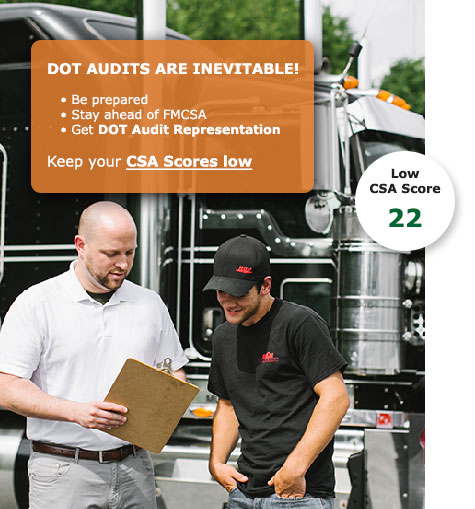
All trucking companies are subject to DOT Audits, which can happen at random or every few years in certain industries. Regardless of preparation, DOT audits can be time-consuming, and you will want to be diligent and organized prior to the audit.
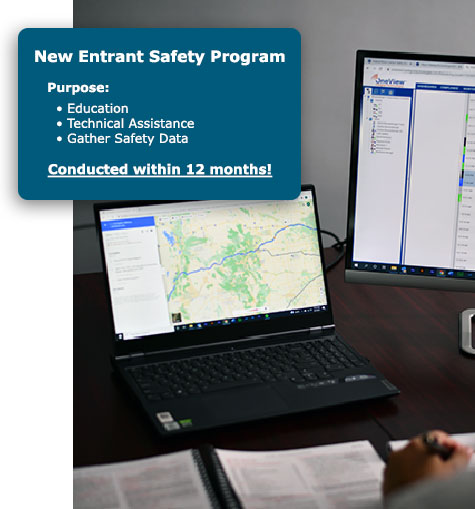
All new interstate carriers are placed into a new entrant safety program where they must demonstrate adequate basic safety management controls. The purpose of this audit is to provide educational and technical assistance to the new entrant.
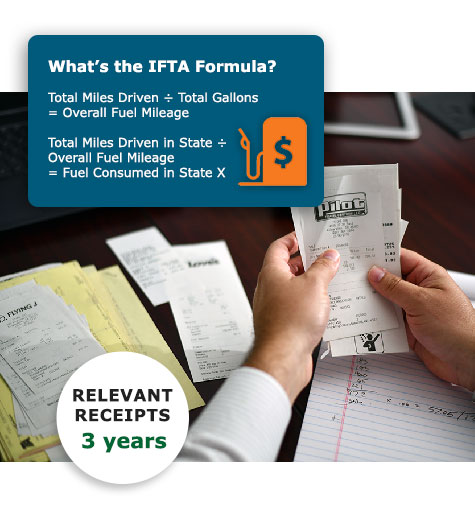
All motor carriers with vehicles that are set up with the International Fuel Tax Agreement are subject to a DOT Audit by the IRS every 5 years including inspection of relative fuel receipts, mileage and trip sheets.
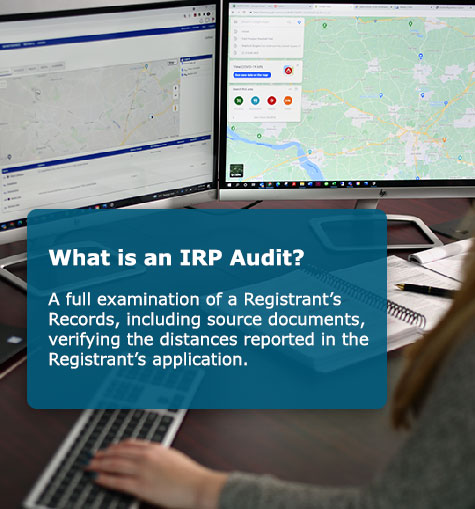
Our DOT Compliance Specialists can perform a mock IRP audit to assess your company, or CNS can represent you during an IRP audit. Either way, CNS Specialists can ease your mind by leading you through the process of an IRP audit.
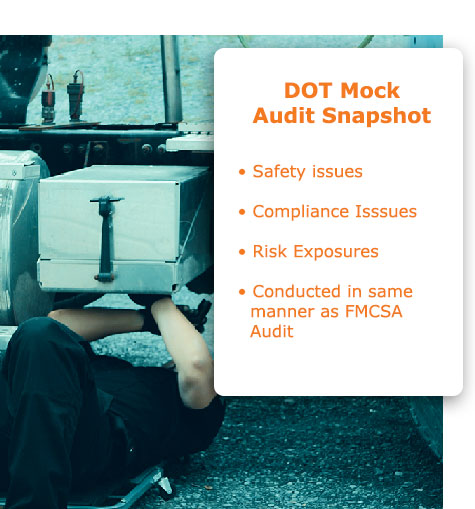
All companies are subject to DOT audits, which is why we offer a DOT Mock Audit Service. This service provides a great snapshot of your company’s current safety, compliance, and risk exposures. Our DOT mock audit will be conducted in the same matter as an FMCSA auditor.
All trucking companies are subject to DOT Audits, which can happen at random or every few years in certain industries. Regardless of preparation, DOT audits can be time-consuming, and you will want to be diligent and organized prior to the audit.
All new interstate carriers are placed into a new entrant safety program where they must demonstrate adequate basic safety management controls. The purpose of this audit is to provide educational and technical assistance to the new entrant.
All motor carriers with vehicles that are set up with the International Fuel Tax Agreement are subject to a DOT Audit by the IRS every 5 years including inspection of relative fuel receipts, mileage and trip sheets.
Our DOT Compliance Specialists can perform a mock IRP audit to assess your company, or CNS can represent you during an IRP audit. Either way, CNS Specialists can ease your mind by leading you through the process of an IRP audit.
All companies are subject to DOT audits, which is why we offer a DOT Mock Audit Service. This service provides a great snapshot of your company’s current safety, compliance, and risk exposures. Our DOT mock audit will be conducted in the same matter as an FMCSA auditor.
The DataQ process is for truck drivers and motor carriers to challenge inspection reports with incorrect violations, truck accidents that meet certain guidelines, or an inspection assigned to you by mistake,. If successful, the violation can be removed from your record saving your CSA scores and your money from fines and increased insurance rates.
When a trucking company goes through a compliance review and receives violations, they can end up with a Conditional or Unsatisfactory rating. This can be very expensive for a motor carrier because bad CSA scores affect insurance, broker relationships, and more. It is important to start the process of being upgraded back to a Satisfactory Rating.
This incredible audit guide covers everything you need to know about how carriers are selected for an audit, how to survive an audit, how to fix mistakes found in an audit, how to upgrade from a conditional or unsatisfactory rating after an audit, and how to pass required annual periodic inspections! WOW!
FMCSA will monitor your safety performance and compliance through its Safety Management System (SMS). If you do not improve, they may investigate your company further.
A motor carrier is considered high-risk based on many sources of information, how recent this information is, and more… and the FMCSA wants to understand why.
The FMCSA has three categories of intervention when dealing with a potentially high-risk carrier: Early Contact, Investigation, and Follow-On.
BASICs are Behavior Analysis and Safety Improvement Categories (BASICs) and were established because they are strong indicators of future crash risk and exceeding them can put you on FMCSA’s priority lists which can later result in fines and violations.
The seven Behavior Analysis and Safety Improvement Categories are:
A Conditional safety rating means FMCSA found safety management controls that need improvement. Even if you can still operate, a conditional rating can impact broker relationships, load opportunities, insurance pricing, and recruiting, because many partners treat it as a higher risk indicator.
Carriers typically have a limited window after receiving the rating letter to submit corrective action and request an upgrade before the rating fully takes effect. Many carriers plan around the common 60-day timeframe referenced for rating changes to become effective, so acting immediately is critical.
CNS will prepare and represent you through an audit. If you already had an audit, we can represent you through a safety rating upgrade and help with associated fines as well.
Specifically, our DOT Compliance team is available to help with any type of audit, including:
Yes. CNS helps carriers identify compliance gaps, correct violations, improve CSA scores, and implement corrective actions designed to reduce out-of-service risk.
DOT auditors are essential for ensuring public safety and maintaining industry standards by enforcing critical transportation regulations. Their rigorous training and mandatory certification process, overseen by the Federal Motor Carrier Safety Administration (FMCSA), are specifically designed to ensure they have the expertise needed to perform their duties fairly and accurately.
Their training follows a highly structured and mandatory certification process for all personnel who conduct safety audits, investigations, and inspections. This ensures a standardized, methodical approach based on an extensive manual called the Electronic Field Operations Training Manual (eFOTM).
Yes. You can challenge an FMCSA Notice of Claim (NOC), but you must act quickly and follow strict federal procedures. Most carriers have 30 days from the date of the NOC to respond. Missing this deadline can result in automatic penalties and loss of appeal rights.
An NOC is issued by the Federal Motor Carrier Safety Administration after an investigation or audit identifies alleged violations. Carriers are not required to automatically pay—they have several response options.
A Corrective Action Plan (CAP) is a written plan that explains what problems were found, what actions you took to fix them, and what systems you will implement to prevent repeat violations. A strong CAP includes policies, training, monitoring/auditing steps, and proof documents that match the violations cited in your audit.
Commonly cited problem areas include:
Driver Qualification Files: missing annual MVRs, missing driver violation lists, missing annual reviews
Hours of Service: missing supporting documents (BOLs, fuel/scale receipts, lodging), inconsistent logs, weak monitoring/corrective actions
Drug & Alcohol: missing pre-employment test results, missing reasonable suspicion documentation, incorrect random pool setup
Maintenance: incomplete annual inspections, weak DVIR processes, poor repair tracking, and operating equipment with unresolved out-of-service conditions

Amazon Relay is raising the bar on carrier safety—and for many fleets, the clock is already ticking. While Amazon has long relied on FMCSA SMS

For many new or small fleets, getting stopped at a weigh station or roadside inspection can be a nerve-racking experience—especially when you’re trying to maintain

In the trucking world, safety scores are everything. Whether it’s insurance rates, hiring decisions, or DOT inspections, people want to know if a driver is

In response to dozens of industry comments, FMCSA is stepping back from its original 2023 proposal to create a federal-level appeals process for Requests for

In an era where government efficiency programs like DOGE increasingly scrutinize federal agencies for waste and inefficiencies, the Federal Motor Carrier Safety Administration (FMCSA) finds

According to FMCSA’s notice last year, the agency is looking at a totally different way that SMS works, and the changes are coming soon. The